Fifty Weeks of American Leaves: My Season Drinking Only USA-Grown Tea
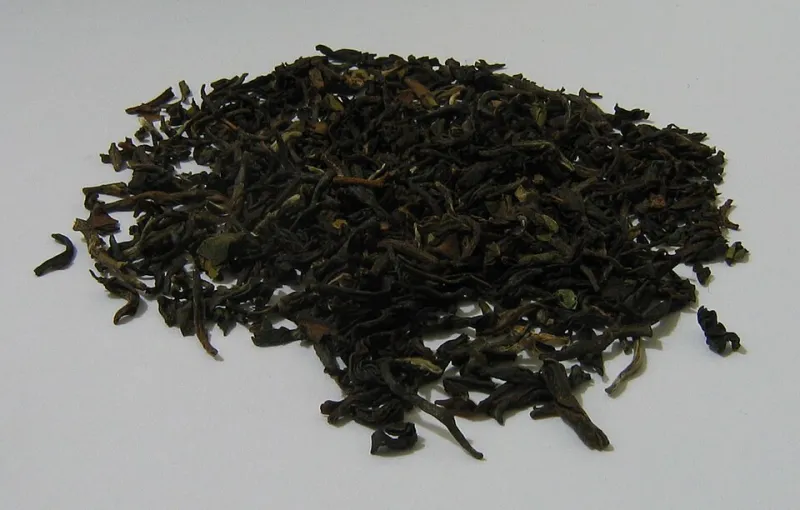
Photo: Mike1024, Public domain, via Wikimedia Commons
It started, like most of my questionable projects, with a comment section. Someone insisted that "real tea" couldn't be grown in America, and I took it personally in a way that only a stubborn person with a kettle can.
So I made a deal with myself: for one full season, every week, I would brew a tea grown on US soil. No imports, no shortcuts. Twenty-plus weeks later, I've had some of the best cups of my life, a few genuinely bad ones, and a whole new appreciation for what "American tea" even means.
First, a Reality Check
The US tea industry is tiny. Commercial production is concentrated in Hawaii and the Southeast — South Carolina, Alabama, Mississippi — with small farms popping up in the Pacific Northwest and even the Northeast under hoop houses. Hawaii's volcanic slopes and the humid Gulf Coast are genuinely good tea climates, which is why those regions lead. Everything else is pioneer territory.
What follows is the highlight reel, week by week-ish.
The Heavy Hitters
Hawaii (weeks 1–5): I started where the quality ceiling is highest. Hawaiian grown tea — particularly from the Big Island and Kauai — is unmistakably lush. A hand-processed oolong from a small Kona-area farm had that buttery, orchid-sweet quality that usually demands a very high price tag from Taiwan. It did demand a very high price tag anyway, to be fair: expect $20–40 for a couple of ounces. Worth it once. Maybe twice.
South Carolina (weeks 6–9): The Charleston Tea Garden is the granddaddy of American tea, and their first-flush-style black tea is approachable and malty — a friendly, uncomplicated cup that reminded me of a mild Assam. This is the tea I'd hand someone skeptical about the whole experiment. It's widely available and reasonably priced, usually under $15 for a decent tin.
The Underdogs
Alabama (weeks 10–14): This is where the experiment got interesting. Small growers in the Alabama hills are producing small-batch green teas with a surprising grassy snap — think springtime, cut grass, a little spinach-bright edge. Some batches were uneven; one was bitter enough that I questioned my water temperature before realizing the leaf just needed a gentler hand. But when it was good, it was good, and at $12–18 an ounce, it felt like discovering a band before they got famous.
Oregon (weeks 15–19): Willamette Valley growers are working against a cooler climate, and it shows in the leaf — smaller, more delicate, with a green tea that's light and almost mineral-forward. It's not going to out-punch a Yunnan black, but there's a quiet elegance to it. A Pacific Northwest white-style tea I tried in week 17 was one of the most subtle cups of the whole run, all honey water and fresh hay.
Mississippi and friends (weeks 20–22): A rotating cast of Gulf Coast micro-farms, mostly sold through farmers markets and online shops. Quality varied wildly week to week, which is the honest reality of a young industry. The best of them — a roasted-style green from a half-acre farm — tasted like toasted rice and autumn.
What American Tea Actually Tastes Like
If I had to sum it up: American-grown tea is young. It has the bright, slightly unruly energy of a first-draft. Hawaiian teas are the polished exception; everything else is charmingly rough around the edges, and that's part of the appeal. You're tasting a frontier, not a tradition.
How to Source Your Own
- Start with Hawaii and South Carolina for reliability. Both have established farms with online shops.
- Follow the small farms on social media. Gulf Coast and Pacific Northwest growers sell out fast and announce harvests on Instagram before anywhere else.
- Buy harvest-dated tea. Small farm lots vary; recent harvest beats vague labeling every time.
- Expect to pay more per ounce than imported grocery-store tea, but less than you'd fear. $12–25 an ounce covers most of the good stuff.
- Brew gently. Many American teas are minimally processed and bruise easily. Lower your water temperature and shorten your steeps.
The Verdict, Five Months Later
Did every cup change my life? No. Did the experiment change how I think about tea? Completely. Drinking domestically grown tea week after week made the whole thing feel local and seasonal in a way imported tea never has — like joining a CSA, but for camellia sinensis.
The comment-section skeptic was wrong, obviously. Real tea grows in America. It's just still learning to walk, and honestly, watching it take those steps is half the joy.
Steep beautifully, and sip slowly — wherever the leaf comes from.