The Bedtime Tea Shelf: What Actually Helps You Sleep (and What's Quietly Sabotaging It)
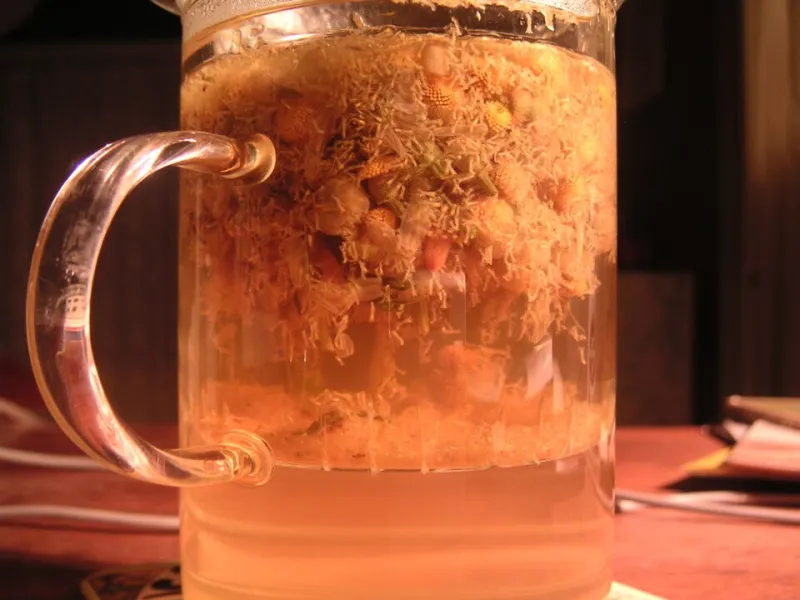
Photo: Greg, CC BY-SA 2.0, via Wikimedia Commons
There's a particular kind of hope in a bedtime mug. You've dimmed the lights, put the phone across the room, and you're counting on chamomile to do the rest. But here's what most tea drinkers don't realize: some of the prettiest boxes in the 'sleep' section of your grocery store are quietly working against you.
Let's sort the shelf—first the blends that earn their place on your nightstand, then the imposters you should relegate to morning duty.
The Seven That Actually Earn Their Keep
1. Chamomile
The classic for a reason. Chamomile contains apigenin, an antioxidant that binds to receptors in the brain associated with drowsiness. It won't knock you out like a sleep aid, but it lowers the mental volume knob.
Steep it right: 200°F water, 5–7 minutes, covered. That lid matters—it traps the volatile oils that carry both the flavor and the calm.
2. Lemon Balm
A member of the mint family with a soft citrus edge, lemon balm has been studied for its effect on mood and restlessness. It's gentle, slightly sweet, and pairs beautifully with a spoonful of honey.
Steep it right: 200°F, 5–10 minutes. Longer steeping coaxes out more of the soothing compounds without turning bitter.
3. Tulsi (Holy Basil)
An adaptogen with roots in Ayurvedic tradition, tulsi helps the body weather stress—and evening stress is often what keeps Americans scrolling at 11 p.m. It has a clove-like warmth that feels almost dessert-like.
Steep it right: 200–212°F, 5 minutes. Tulsi is forgiving; it won't punish you for getting distracted.
4. Passionflower
Less famous than chamomile but arguably more effective. Herbalists have used passionflower for centuries, and modern research suggests it may increase levels of GABA, a neurotransmitter that quiets brain activity.
Steep it right: 212°F, 6–8 minutes. It has a hay-like, grassy taste—blend it with lemon balm if that's not your thing.
5. Lavender
You know the scent. In tea form, lavender is floral and perfumed, and even the aroma alone has been shown to ease tension. A little goes a long way—too much and your mug tastes like soap.
Steep it right: 200°F, 4–5 minutes. Try it blended with chamomile for a full sensory wind-down.
6. Valerian Root
The heavy hitter. Valerian has genuine (if inconsistent) evidence behind it for sleep onset, and it's the base of most 'sleepy time' blends sold in the US. Fair warning: it smells earthy in a way some people love and others absolutely don't.
Steep it right: 212°F, 8–10 minutes. It needs the long steep. Consider it your last resort when chamomile isn't cutting it.
7. Rooibos
Technically not a true tea—it's a South African shrub—but it's naturally caffeine-free, rich in antioxidants, and has a cozy, nutty sweetness that pairs with milk. It's the closest thing to a warm hug in a mug.
Steep it right: 212°F, 5–7 minutes. Rooibos never gets bitter, so you can steep it as long as you like.
The Imposters: 'Wellness' Teas Hiding Caffeine
Now for the part nobody puts on the label.
Anything with green tea, white tea, or yerba mate. Yes, even the ones marketed for 'calm' or 'focus.' A single cup of green tea carries 25–45 mg of caffeine—roughly half a cup of coffee. White tea is lower but not zero. Yerba mate is a full-on stimulant.
Detox and 'skin glow' blends. Flip the box over. Many of these contain green tea or guarana for a 'metabolism boost.' If caffeine is in the ingredient list, it's a morning tea, period.
Anything with actual tea plant (Camellia sinensis) in it. Matcha, sencha, Earl Grey, jasmine green—it all has caffeine. Jasmine's aroma may be relaxing, but the leaves will keep you up.
Decaf doesn't mean caffeine-free. A cup of decaf black tea still has 2–5 mg. Fine for most people, but if you're caffeine-sensitive, stick to pure herbals.
A Simple Evening Steeping Ritual
You don't need an elaborate ceremony—just a few intentional minutes:
- 30–45 minutes before bed, fill your kettle and pick your blend. Chamomile and lemon balm are a foolproof duo.
- Heat to 200°F. If you don't have a variable-temperature kettle, let boiling water sit for two minutes.
- Cover your mug while it steeps. Five minutes minimum. Use the wait to stretch, wash your face, or just stand still.
- Sip without screens. Even ten quiet minutes changes how the rest of your evening feels.
- Rinse your mug and leave it out—a small signal to tomorrow's you that the ritual will be waiting.
Sleep isn't something you can chase. It's something you make room for. A well-chosen mug, steeped slowly and sipped without hurry, is one of the kindest ways to make that room. Here's to tonight's cup—and a better tomorrow morning.