One Dollar, One Cup: We Brewed the Cheapest Teas in America to Find Out What You're Really Paying For
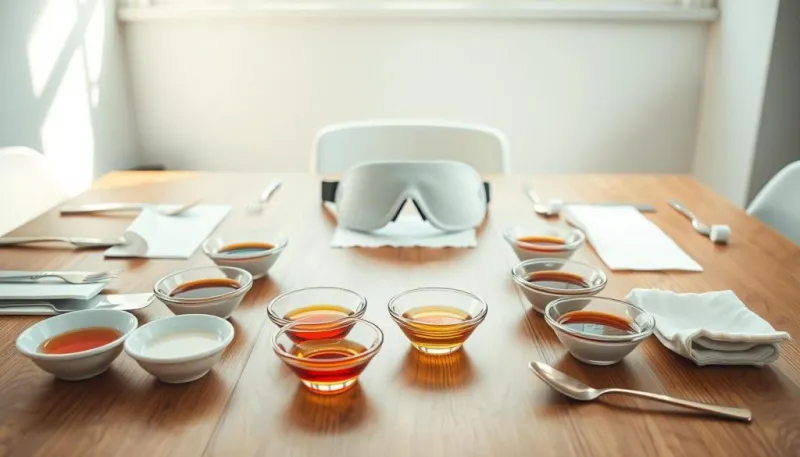
Photo: blind tea taste test cups lined up on wooden table, via cookwareninja.com
There's a certain kind of thrill in grabbing a tin of tea off the dollar-store shelf. A buck. Maybe a buck twenty-five. Enough bags to last a couple of weeks, sitting there between the off-brand crackers and the seasonal candles.
But here's the question that keeps nagging at us: is that tea actually good, or is it just cheap? Can a dollar tin ever produce a cup worth slowing down for — the kind of quiet, steaming pause that turns a Tuesday morning into a small ritual?
We decided to find out the only way that felt fair: blind brewing, real people, and a scoring sheet that didn't care about price tags.
The Lineup: From Dust to Fancy Leaves
We pulled together eight teas across three price tiers, all widely available in the US:
- The dollar tier: Three black teas from dollar stores and discount grocers, all in the $1–$1.50 range, plus one generic green tea.
- The mid-shelf tier: Two national brands you'd find at any Kroger or Safeway, around $4–$6 a box.
- The specialty tier: Two loose-leaf blends from an online tea shop and a local tea house, $10–$14 for a couple of ounces.
Before brewing, we did a little forensics. Cut open a bag from each cheap tin and you'll see the truth pretty quickly: a fine, almost powdery grind the tea industry calls dust and fannings. These are the tiny fragments left after larger leaves are processed. They brew fast, they brew bitter, and they lose their character quickly on the shelf.
The loose-leaf samples, by contrast, looked like actual leaves — rolled, twisted, some whole. That structure matters. Whole leaves release their flavor slowly and evenly, which is why a good oolong can be steeped three or four times while a dust-filled bag gives you one aggressive shot and then quits.
The Blind Taste Test
Five panelists, none of whom work in tea. Two self-identified "I just drink whatever's around" casual sippers, one sweet-tea-since-childhood Southerner, one former barista, and one person who drinks green tea every single day and had opinions ready.
Every tea was brewed the same way: fresh boiled water, four-minute steep for the blacks, three minutes for the greens, nothing added. Samples were labeled only A through H. Panelists scored aroma, flavor, bitterness, and — the one that mattered most to us — whether they'd actually finish the cup.
The Results: Cheap Tea Isn't the Villain Here
Here's where it gets interesting. The specialty blends won, as expected — our panelists used words like "smooth," "toasty," and one memorable "tastes like a bookstore smells." But the gap between the dollar teas and the mid-shelf supermarket boxes was smaller than anyone predicted.
Two of the four dollar-tier teas landed squarely in the middle of the pack. One cheap black tea even beat a national brand that costs four times as much. Our barista panelist described it as "perfectly fine. Clean, a little thin, but I'd drink this at work without complaining."
The losers at the bottom were the ones that tasted flat and papery — a one-note bitterness with nothing behind it. Interestingly, that wasn't strictly a price thing. One mid-tier flavored blend scored nearly as poorly because the flavoring tasted artificial and the base tea underneath was forgettable.
The verdict: price buys you consistency and depth, not basic drinkability. A dollar tin can absolutely make a decent cup. It just can't make a memorable one.
What You're Actually Paying For
Break down the money and the picture gets clearer:
- At $1 a tin, you're paying for the bag, the box, the shipping, the shelf space, and the labor. The tea itself costs pennies. That's why it's dust — dust fills a bag cheaply and brews fast.
- At $5 a box, you're paying for better leaf grading, fresher stock, and more careful blending.
- At $12 for loose leaf, you're paying mostly for the leaf itself — often from a single garden or harvest, with flavor that unfolds over multiple steeps.
Here's the math nobody mentions, though: loose leaf can be re-steeped. That $12 tin of oolong might yield thirty or more satisfying cups once you count second and third infusions. Suddenly it's 40 cents a cup — cheaper than the drive-thru, and better than most of what we tasted blind.
The Realistic Minimum Spend
If you want a number, here's ours: about 25 to 40 cents per cup is where tea stops being merely warm and starts being good. That's roughly a $4–$6 box of decent bagged tea or a modest pouch of entry-level loose leaf.
But we're not here to shame the dollar tin. Budget tea has its place — it's what you brew for a big pitcher of iced tea, what you keep at the office for emergencies, what you spike with lemon and honey when you have a cold. Calm shouldn't cost a fortune, and a $1 cup brewed slowly, sipped by a window with your phone in another room, beats a $15 ceremony you never make time for.
The real upgrade isn't always the tin. It's the four minutes you give it.
Our panel's practical tips:
- Don't over-steep cheap tea. Dust brews fast — two minutes, not five, and the bitterness stays manageable.
- Check the bag. If the contents look like ground coffee, expect one quick, punchy cup. Plan accordingly.
- Buy loose leaf for the teas you drink daily. Save the bags for iced, guests, and the back of the cupboard.
- Freshness beats price. A mid-shelf box bought last month will often out-brew a specialty tin that's sat around for a year.
Sip slowly. Steep beautifully. And know what you're paying for — whether it's a dollar or a dozen.