Beyond the Spice Aisle: Turning Your Saturday Farmers Market Into a Tea Supply Run

Photo: PEO ACWA, CC BY 2.0, via Wikimedia Commons
There's a moment at every good farmers market when you realize you're not shopping for dinner anymore. You're holding a bunch of lemon verbena that smells like a lemon drop and a breeze, and you're thinking: this could be tea.
You're right. It can. And the market is arguably the best place in America to build a tea pantry from scratch — fresher than anything on a shelf, cheaper than most boutique blends, and you get to shake the farmer's hand while you're at it. Here's how to shop it like a tea buyer instead of a tourist.
Know What You're Hunting For
Not everything green makes a good cup. These are the market regulars worth your tote bag space:
- Mint — The workhorse. Peppermint and spearmint both brew beautifully fresh or dried. Ask for a big bunch; it dries down to almost nothing.
- Lemon verbena and lemon balm — Verbena is the showstopper, bright and almost candied. Lemon balm is gentler and calmer, a lovely evening herb.
- Ginger — Young, fresh ginger from a farm stall (often Southeast and Hmong American growers at markets in the Southeast, California, and the Pacific Northwest) makes a zingy, honey-sweet infusion the jarred stuff can't touch.
- Hibiscus — Look for dried flowers or fresh calyces at Caribbean and West African vendors. Tart, ruby-red, and the backbone of every good agua fresca.
- Chicory — More common at Louisiana-adjacent markets and specialty produce stalls. Roasted chicory root adds a toasty, coffee-adjacent depth to blends.
Which Stalls to Work
Herb farmers are your first stop — the folks selling cut bunches of basil and dill usually grow verbena, balm, and mint too, even if it's not displayed. Ask.
Dried goods vendors and spice sellers are your hibiscus and chicory source. Root vegetable growers often have fresh ginger in late summer and fall. And honey vendors, while you're at it, because a market haul without honey is a haul with a hole in it.
Dry and Store Like You Mean It
Fresh herbs are lovely for a day or two, but drying is what turns a Saturday splurge into a month of tea.
Air drying: Rinse, pat dry, bundle five or six stems with twine, and hang them upside down somewhere dark, dry, and airy — the top of a closet works. Mint and verbena are ready in one to two weeks when the leaves crumble at a pinch.
Oven method (impatient edition): Spread leaves on a sheet pan, set the oven to its lowest temp (under 200°F), crack the door, and check every 20 minutes. Low and slow or you'll bake the flavor right out.
Storage: Airtight glass jars, out of sunlight. Label them — dried mint and dried balm look identical and taste nothing alike. Whole dried leaves keep their punch for about six months; crumble them only when you're ready to brew.
Fresh ginger, meanwhile, doesn't need drying at all. Slice thin, simmer ten minutes, done. Or slice and freeze it flat in a bag for instant winter tea.
Three Market Hauls, Three Weeks of Tea
The Weekday Reset ($12-ish): One big bunch of mint, a bunch of lemon balm, and fresh ginger. Dry the herbs, freeze the ginger. You now have a morning mint-ginger infusion and a calm evening balm cup for the whole week.
The Porch Punch ($15-ish): Dried hibiscus, a lemon, and honey from the honey stall. Simmer hibiscus with water and a honey spoonful, chill it, ice it. This is your summer pitcher tea, and it beats anything in the supermarket cooler.
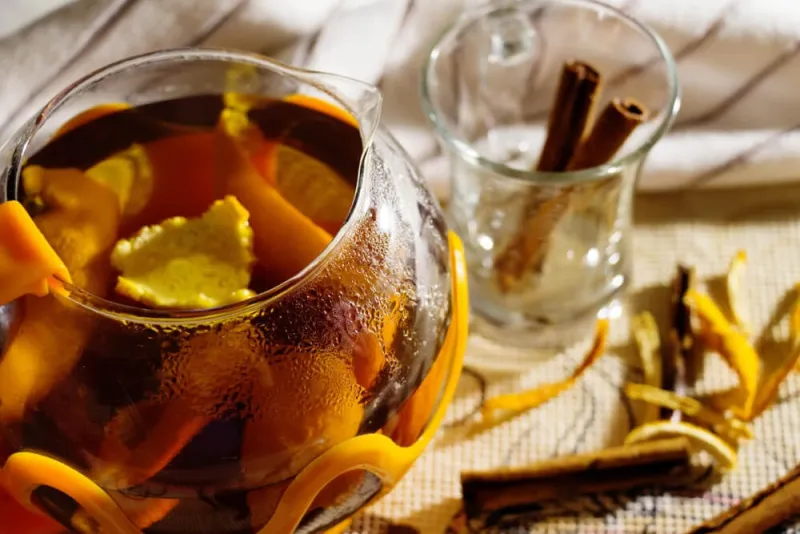
The Cozy Kit ($18-ish): Roasted chicory, fresh ginger, and whatever cinnamon-adjacent spice the spice vendor throws in free. Steep the chicory long and dark, add ginger and honey. It scratches the after-dinner coffee itch without the 9 p.m. jitters.
What to Say: Three Vendor Scripts
Here's where market shopping differs from a grocery run: the herbs might be grown for looks, garnish, or hardiness, not for drinking. Decorative herbs can carry sprays or simply taste like nothing. These three questions sort the tea-grade from the throwaway.
1. "Is this grown for eating, or just for looks? Did anything get sprayed on it?" Farmers respect a straight question. Many small growers don't spray at all — but if the answer is " ornamental" or "treated," move on. You want an edible-grade or unsprayed answer, full stop.
2. "Which of your herbs taste the best brewed? What do you drink?" This is the magic question. Farmers drink their own crops, and they'll steer you to the mint that's loaded with oils or the verbena patch they're proudest of. You'll get better tea and a better story in one ask.
3. "Can I smell it before I buy the bunch?" Any good herb should announce itself. If a mint bunch smells like a lawn instead of a candy cane, it's old or underfed. Strong aroma in the leaf equals strong aroma in the cup. No smell, no sale.
Steep It Forward
The best part of a market-sourced tea pantry isn't the savings, though those are real. It's that every jar on your shelf has a memory attached — the vendor who told you how her grandmother brewed hibiscus, the mint that filled your whole kitchen with smell while it dried.
Sip slowly. Steep beautifully. And next Saturday, bring a bigger bag.