Five Minutes in the Flea Market Aisle: A Field Test for Secondhand Teapots
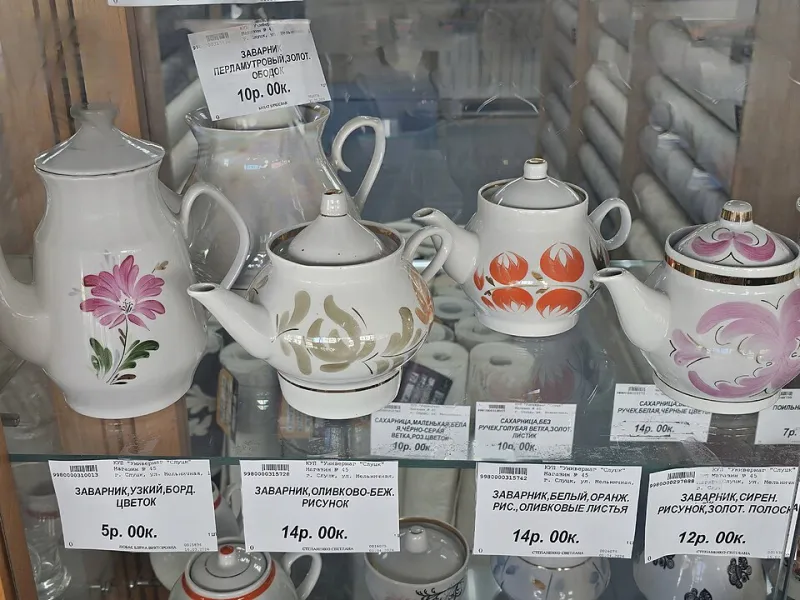
Photo: Agbarto, CC BY-SA 4.0, via Wikimedia Commons
There's a specific kind of quiet thrill in lifting a dusty teapot off a garage sale table, flipping it over, and realizing the person pricing it had no idea what they had. It happens more than you'd think. Americans have been clearing out attics for generations, and teaware — heavy, breakable, hard to ship — is exactly the stuff that gets handed off for pocket change.
The catch is that for every hidden gem, there are five cracked, chipped, or quietly dangerous pots waiting to waste your money. The good news: you don't need an appraiser's eye. You need about five minutes and a short mental checklist. Here's how to run it.
Start With the Flip: The Underside Tells the Story
Before you admire the glaze or the shape, turn the pot over. The base is where makers left their signatures, and where time leaves its most honest evidence.
Look for a maker's mark — a stamped logo, an incised signature, a paper label that survived. Names worth slowing down for include Hall, Sadler, Price Kensington, and Wedgwood on the porcelain side, and anything marked "Iwachu" or "Nambu" on cast iron. On American pieces, a red clay mark from Ohio or a stoneware stamp from the Carolinas can signal a genuinely collectible piece.
Also check the base for grit or a rough, unglazed ring. That's normal and even desirable — it shows the pot was fired sitting on kiln sand, which usually means age rather than a flaw. What you don't want is a wobble. Set it flat on the table. If it rocks, the base warped, and warped bases tend to become cracked bases.
The Flashlight Test (Your Phone Works)
Hairline cracks are the silent killer of thrifted teapots. They're invisible when the pot is dry and dusty, and they turn into full breaks the first time you pour boiling water into them.
Here's the trick: hold the pot up toward the light — the sun through a flea market tent works beautifully, or use your phone's flashlight — and look through the body. Any crack, even a hair-thin one, will show as a dark line running through the wall. Check around the spout and the handle joins especially, since those are stress points where cracks start.
Run your thumb gently around the rim and inside the lid seat, too. Small nicks on the rim are cosmetic. Anything you can catch a fingernail on inside the body deserves a second thought.
Crazing: Sometimes Fine, Sometimes a Dealbreaker
Crazing is that fine spiderweb of tiny lines across the glaze. You'll see it on a lot of older pieces, and whether it matters depends on the pot.
On a decorative stoneware or a pot you'll display on a shelf, crazing is character. Collectors pay extra for it. But on a teapot you plan to actually brew in, heavy crazing is a problem. Those micro-cracks run through the glaze into the porous clay underneath, which means the pot will absorb water, tea tannins, and eventually bacteria. It will also stain a lovely shade of brown that no amount of scrubbing fixes.
A lightly crazed vintage pot that's been well cared for can still serve. A heavily cracked glaze that smells musty when you lift the lid? Walk away.
A Word on Old Glazes and Lead
This is the part most flea market guides skip, and it's the one that matters for your health. Glazes on pottery made before the 1970s — and especially ornamental pieces from the early 20th century — can contain lead. That includes a lot of the brightly colored, hand-painted pots you'll find at estate sales.
The risk comes from lead leaching into acidic liquids, and tea is mildly acidic, especially with lemon. If you're buying a decorative vintage pot to display, this isn't a concern. If you plan to brew in it, stick to pieces from known makers with intact, glossy, non-flaking glazes, or pick glass and cast iron instead. You can also pick up a home lead test kit at any hardware store for around ten dollars — swab the interior, wait, and read the result before that pot ever touches your morning cup.
Know Your Materials, Know Your Prices
Each material has its own tells, and its own going rate at American secondhand markets.
Cast iron. A genuine Japanese tetsubin is heavy for its size, has a textured, pebbled surface, and a lid that seats snugly. Check the interior: a good one is unglazed and shows dark seasoning; a fully enamel-lined pot is fine too, but check for chips in that lining. Reproductions are common and not necessarily bad — just don't pay vintage prices for a new one. Expect $10–25 for a solid usable piece, more for signed Japanese work.
Porcelain and bone china. Hold it up to the light. Fine porcelain has a translucence that cheaper earthenware lacks — you'll see a soft glow through the walls. English and American makers' marks are easy to look up on your phone right there in the aisle. Clean, marked pieces usually run $8–20.
Glass. Borosilicate and heatproof glass is the safest bet for brewing, but most thrift-store glass teapots are ordinary soda-lime glass. Check for a maker's mark on the base and inspect the spout carefully — glass cracks there more than anywhere. A clean marked Pyrex-flask-style or heatproof pot under $10 is a genuine score.
Building the Shelf: The Under-$30 Reality
Here's what makes thrifted teaware worth the hunt: for the price of one new mid-range teapot, you can build an entire shelf. A realistic starter haul looks like this:
- A cast iron pot with intact interior, $15
- A small porcelain pot for delicate greens, $8
- A glass pot for flowering teas and showing off, $6
That's $29, three very different brewing tools, and — if you chose well — pieces with more life in them than anything you'd order new. Add the ritual of the hunt itself and you've got something no online cart can ship: a shelf with stories attached.
Sip slowly. Steep beautifully. And always flip the pot over.