Fourteen Tins, One Kettle: Breaking the Cycle of Tea Tin Guilt
Photo: Akum20, CC BY-SA 4.0, via Wikimedia Commons
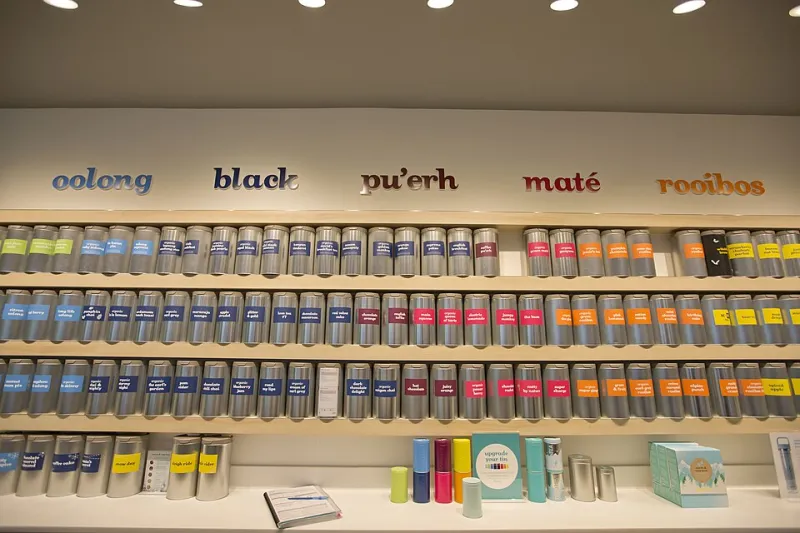
Somewhere in your kitchen right now — maybe on a dedicated shelf, maybe crammed into a cabinet above the stove — sits a graveyard of good intentions. A tin of smoked lapsang with three servings gone. A holiday blend you bought in December and haven't touched since February. That sampler pack from the farmers market in Asheville, where you swore you'd "work through them all."
You haven't. Nobody has. Welcome to tea tin guilt, the most quietly universal experience in the hobby.
Why We Accumulate Tea We Don't Drink
The math of tea buying is seductive. An ounce of a new oolong costs about as much as a fancy latte, so the barrier to entry is basically zero. And unlike wine or cheese, tea seems to last forever — so there's no urgency, no natural forcing function to finish what you start.
Layer in the sampler economy. Tea shops know that variety packs are the gateway purchase, and they're right: nothing feels more responsible than trying six small tins instead of committing to one big one. The problem is that samplers are designed for tasting, not drinking. Two or three sessions per tin, and then what? Then it goes on the shelf, and the shelf gets fuller, and every time you reach past it for the English breakfast you actually drink, you feel a small pang.
Here's the thing, though: that pang isn't proof you're a bad tea person. It's proof you're a curious one. Curiosity generates leftovers. The goal isn't a perfectly empty stash — it's a stash that's working for you instead of nagging at you.
The Three-Shelf System
If you want a fix that doesn't require willpower, borrow this simple arrangement. Divide your collection into three zones:
The Rotation Shelf. Pick four to six tins — no more — and keep them front and center, maybe in a woven basket near your kettle. These are the only teas you're allowed to brew for the next month. When a tin empties, it graduates (more on that below) and you promote something from the back.
The Pantry Bench. The rest of your stash lives here, sealed and out of sight. Out of sight matters more than you'd think; visual clutter is what turns a collection into a guilt pile. Green teas and delicate whites should cycle through the rotation faster, since they fade quicker than blacks and pu-erhs, but everything else can wait its turn patiently.
The Finish Line. An empty tin isn't trash — it's a trophy. Once it's done, repurpose it: store spices, corral paper clips, hold loose change. Or, if you're a gardener, a clean tin with a few holes punched in the lid makes a surprisingly good shaker for dried herbs from the backyard. There's something deeply satisfying about a shelf that shrinks instead of grows.
Blending Your Way Out of a Rut
Some tins don't get finished because they're fine, but not your favorite. That's not a failure — that's raw material. Half the great breakfast blends in history were somebody's house mixture, and your kitchen counts as a house.
A few combinations worth trying with your orphans:
- The Wake-Up Fixer: A malty assam or ceylon blended with a smoky lapsang you couldn't quite love. The smoke becomes a seasoning instead of the main event.
- The Dessert Rounder: A plain green tea livened up with a pinch of a fruity herbal tin. Suddenly both taste intentional.
- The Porch Blend: Leftover black tea plus a spoonful of a mint or citrus tisane. Brew it strong, pour it over ice, and you've invented a summer signature for roughly zero dollars.
Keep a small notebook or a note on your phone with ratios. The blends that work become house recipes; the ones that don't teach you what you actually like, which is the whole point of the sampler shelf in the first place.
When It's Okay to Let a Tin Go
Not every tea deserves a second life, and holding onto duds is its own kind of clutter. A few honest checkpoints:
It's been over a year and you haven't opened it. You've had four seasons of chances. If it never called to you, it won't start now.
The aroma is gone. Open the lid and breathe. Tea doesn't usually spoil in a way that's unsafe, but it absolutely goes flat. If it smells like the inside of the tin instead of like tea, it's past its prime.
You only keep it out of politeness. That gift tin from your aunt? The sentiment was delivered the moment you said thank you. The tea doesn't owe you anything, and you don't owe it shelf space.
What to do with the castoffs: offer them to a friend who's newer to tea (one person's dud is another's discovery), bring them to an office kitchen where free tea vanishes instantly, or compost the leaves and keep the tins. Local food pantries sometimes accept unopened, sealed packages too — worth a quick call.
A Calmer Shelf, a Calmer Cup
The whole philosophy here fits why most of us brew tea at all: to slow down, not to manage inventory. A rotation shelf means every cup you pour is a choice you made recently, from tins you actually like, instead of a reflexive reach for the same bag while fourteen strangers stare at you from the cabinet.
So this week, pull everything down. Three piles: rotation, bench, goodbye. Brew something from the front row tonight. Sip slowly. Steep beautifully. And let the shelf breathe.