Pass the Pot: A Thanksgiving Tea Plan That Fits Between Oven Checks
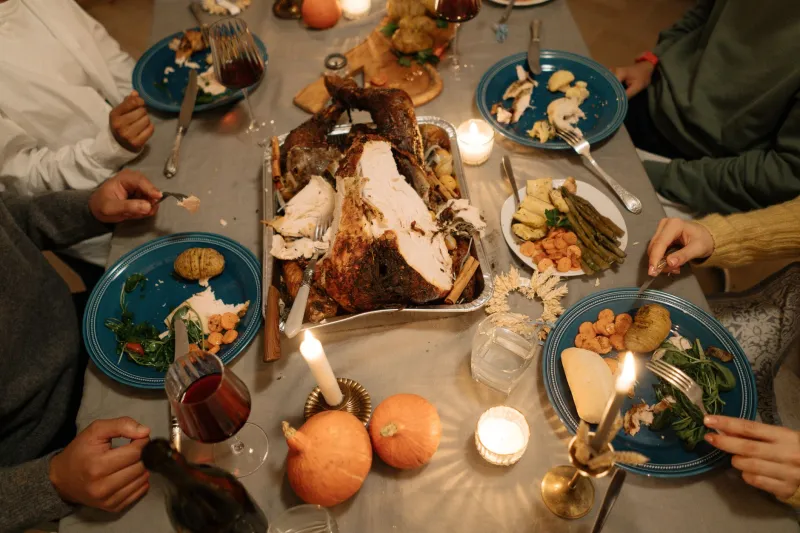
Every Thanksgiving table in America has a wine person. Maybe that is you. But somewhere between the cousin with the jammy Zinfandel and the uncle who insists on something cold and light, there is a quieter seat at the table where a pot of tea would land surprisingly well. Not as a replacement for anything. As a second act.
Tea has two jobs on the fourth Thursday of November. It cuts through fat, and it resets the palate between bites. Tannins and astringency do the scrubbing; aromatics do the lifting. Get it right and somebody who has never bought a loose leaf in their life will ask what is in the pot.
Start With the Jobs, Not the Leaves
Most tea-and-food advice starts with the tea. Flip that. Thanksgiving is a rich, sweet, sage-and-butter-heavy meal, and your cup needs to survive all of it. That rules out anything delicate enough to disappear — a first-flush green, a white tea, a floral oolong that costs more than the bird.
What works: a sturdy black with enough body to stand up to gravy, and a roasted oolong light enough to keep the table from feeling like a second dessert. Two teas. Three at the absolute most. A Thanksgiving spread with a tea menu longer than the food menu is a host who will not sit down.
The Make-Ahead Move: A Spiced Black Concentrate
This is the workhorse. Brew it Saturday or Sunday, park it in the fridge, and heat what you need on the day.
What goes in:
- 1/2 cup loose black tea — a plain Assam or a Ceylon blend, nothing smoked, nothing flavored
- 8 cups filtered water
- 4 inches fresh ginger, sliced thick (no need to peel)
- 3 cinnamon sticks
- 6 whole cloves
- 3 star anise pods
- Peel from one orange, in wide strips
- 1/3 cup maple syrup, or to taste
Bring the water, ginger, cinnamon, cloves, star anise, and orange peel to a bare simmer. Hold it there for 10 minutes so the spices give up their goods. Kill the heat, add the tea, and steep 6 minutes — no longer, or the tannins turn chalky. Strain through a fine sieve, stir in the maple syrup while warm, and chill. You will have about 2 1/2 quarts of concentrate, which is enough for a crowd once diluted.
To serve: one part concentrate to one part hot water for a bright cup, or one to one with steamed milk for something closer to a latte. Reheat gently — never boil it, or the spice notes flatten out.
A note for the planners: the concentrate keeps five days in the fridge and freezes well in quart containers. Make it the weekend before and you have removed an entire task from Thursday.
The Lighter Pot: An Oolong That Knows Its Place
For the table itself, brew a roasted oolong. A Dong Ding or a roasted Tieguanyin gives you toasted grain and stone fruit without any smoke or spice competing with the stuffing. Water at 200 to 205°F, about a tablespoon of leaf per 12 ounces, and a first steep of 2 1/2 to 3 minutes. It will take two or three more steeps, which is exactly what you want when the meal stretches past an hour.
If you would rather not fuss with a gaiwan between courses, go grandpa style: leaf and hot water straight into a prewarmed thermos, lid off for the first minute, then capped. Pour as needed. The tea gets stronger as the meal goes on, which is a feature, not a bug.
A Short Pairing Map
- Turkey and gravy: the spiced concentrate, diluted hot. Fat needs tannin.
- Stuffing and anything with sage: roasted oolong. Sage is loud; toasted grain answers it without arguing.
- Cranberry sauce: the oolong again, or a black tea with a little orange peel in it.
- Sweet potato and maple: the spiced concentrate, undiluted. Sweet on sweet, but the ginger keeps it from getting cloying.
- Pumpkin pie: the concentrate with milk, or a hojicha if you want to end the night without caffeine.
The Oven-Aware Brewing Timeline
Thanksgiving is a scheduling problem with a turkey in the middle of it. Work the tea into the gaps.
Three days out: brew and chill the concentrate. Measure the oolong into a small jar so nobody is digging through tins at 2 p.m.
Wednesday night: fill the kettle and set out the pots. If you own a thermos, rinse it with hot water and leave it upside down to drain.
Thursday, one hour before you carve: boil a full kettle, fill the thermos, cap it. That water will still be hot enough for oolong when the bird comes out.
Twenty minutes before carving: brew the oolong. It holds beautifully in a prewarmed pot or thermos, so do not wait until plates are moving.
Dessert: reheat the concentrate on low while the pie comes out. This is also the moment to put on a pot of hojicha for anyone who has a 6 a.m. Friday.
Logistics That Save You Mid-Meal
Prewarm every pot and mug with hot tap water while the turkey rests. Not for elegance — for heat retention, so the second cup tastes like the first.
Skip the milk-and-sugar bar. Offer maple syrup and one pitcher of milk, and let the concentrate do the flavor work. Fewer moving parts, fewer spills on the tablecloth you will be soaking at midnight.
Keep a small pitcher of iced tea, made from the same concentrate, for kids and for the relative who thinks hot drinks are a personal attack. Same recipe, more ice, no extra work.
Three Ways This Goes Wrong
Steeping the concentrate until it looks dark enough. It is always darker than it tastes. Pull the leaves at six minutes.
Serving four teas. Two is generous. Four means you are brewing during dinner instead of eating it.
Pouring a strong black at 9 p.m. and wondering why the guest room light is on at midnight. Keep a hojicha or a decaf black on the counter for the late shift.
The point is not to convert anybody. It is to have something warm and interesting in a pot when the plates are cleared and nobody wants to move yet. That is a pretty good use of a kettle.